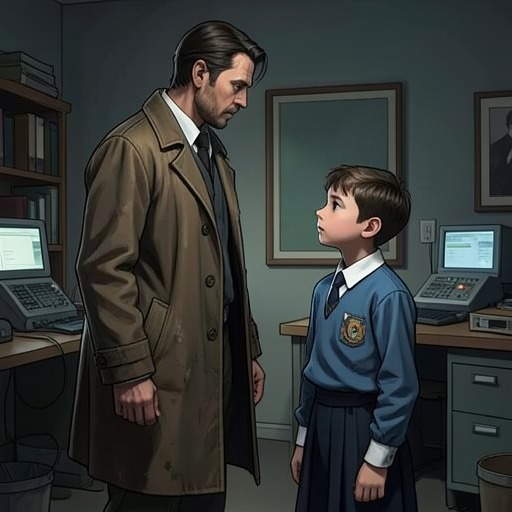
Joseph Knecht and Tito's teacher-student relationship
The Glass Bead GameJoseph Knecht’s tutorship of Tito Designori develops from a family’s appeal for help into a relationship in which authority is established not by force but through courtesy, attention, and shared intellectual work. Tito initially resists the influence Knecht represents, yet encounters with his tutor allow him to glimpse an order of mind that he can respect and may come to love.
The Request and the Terms of Tutorship
Tito’s father, Plinio Designori, raises the possibility of a tutorship after Knecht has helped him through a difficult period. He explains that the relationship with his son is the most troublesome part of his home life: Tito has been spoiled, holds a privileged position in the household, and has increasingly aligned himself with his mother. Plinio hopes that a tutor might take the boy in hand, particularly because Tito is having difficulties at school. He presents the request as a personal favor as well as a possible service to his son.
Knecht welcomes the proposal and tells Plinio that he is happy to try. His acceptance, however, comes with a condition: Plinio and his wife must agree to leave Tito entirely in Knecht’s care for the time being, excluding the daily influence of the home if the tutorship is to have an effect. Knecht asks Plinio to persuade his wife cautiously and allow the discussion time. The arrangement is therefore conceived not simply as supplementary schooling, but as a change in the environment shaping Tito.
When Plinio asks whether Knecht really believes he can help the boy, Knecht points to Tito’s inherited abilities from both parents. In his view, the difficulty is not an absence of talent but a lack of harmony among Tito’s capacities. The purpose of the tutorship will be to awaken, strengthen, and eventually make Tito conscious of a desire for that harmony. Knecht describes his role as an attempt rather than a guaranteed remedy.
Establishing Authority Without Force
Knecht’s visits to the capital help turn Plinio’s proposal into a workable plan. Plinio’s wife gradually comes to trust him and agrees to it. Tito’s own first encounters with Knecht are less straightforward. He boldly objects to being addressed with the familiar form, since adults around him, including his teacher, use the polite form. Knecht responds with perfect courtesy, apologizes, and explains that in his Province teachers use the familiar form for students, even those who are grown up. He does not make the disagreement into a contest for authority.
Tito’s attitude remains divided. He recognizes that both his parents hold Knecht in high regard, and senses in him a power that threatens the freedom he has been accustomed to. At times he is openly rude. Afterward, however, he regrets these breaches and tries to make amends: Knecht’s serenity and courtesy make Tito’s own conduct feel like a weakness. Beneath his defiance, Tito privately senses that Knecht may be someone he could love and revere. The relationship’s early tension thus lies between resistance to being guided and a growing attraction to the person offering guidance.
A Lesson in the Glass Bead Game
A decisive change begins during an encounter in which Tito finds Knecht alone, waiting for Plinio. Knecht is sitting still with his eyes half closed in meditation. Tito instinctively checks his stride and starts to leave quietly, but Knecht opens his eyes, greets him, and rises. He then indicates the piano and asks whether Tito likes music. This small exchange redirects an encounter that might have remained an observation of Knecht’s composure into an invitation to participate.
Tito says that he enjoys music, though he has stopped taking lessons and practicing. He explains that he is doing poorly at school and that his teachers keep pressing him, but he still likes listening. Knecht finds the piano tuned and plays an andante movement by Scarlatti that he has recently used as the basis for a Glass Bead Game exercise. Seeing Tito’s close attention, he stops playing and begins to explain how such an exercise works: he analyzes the music and gives examples of how it may be translated into the Game’s hieroglyphs.
For the first time, Tito sees Knecht not merely as his father’s guest or as a celebrated scholar whose presence threatens his self-esteem, but at work in his particular art. Tito only dimly understands the Game’s meaning, yet recognizes the exacting skill it requires and the devotion it seems to call forth. Knecht’s assumption that Tito is grown-up and intelligent enough to follow a complicated explanation also gives the boy greater assurance. During this half-hour, Tito begins to perceive how Knecht’s cheerfulness and calm are connected to the disciplined practice he has witnessed.
Significance of the Relationship
The tutorship is grounded in Knecht’s effort to bring Tito’s abilities into harmony, but the first evidence of change is relational rather than academic. Knecht treats Tito’s objection to the familiar form respectfully, accepts the boy’s stated interest in music, and gives him a serious introduction rather than a childish simplification. Tito’s response shifts from suspicion and defiance toward attention and a tentative recognition of Knecht’s worth.
The piano lesson also gives their relationship a concrete point of contact. Tito encounters the Glass Bead Game through music, not as an abstract claim about Knecht’s authority. Watching Knecht analyze Scarlatti allows him to see a demanding practice embodied in a person whose composure had previously seemed threatening. The scene does not establish that Tito’s difficulties have been resolved; it marks an opening in which respect and intellectual curiosity can begin to coexist with his resistance.